
 Q2
Q2
 Plus 4
 QIDI Box
 Q1 Pro
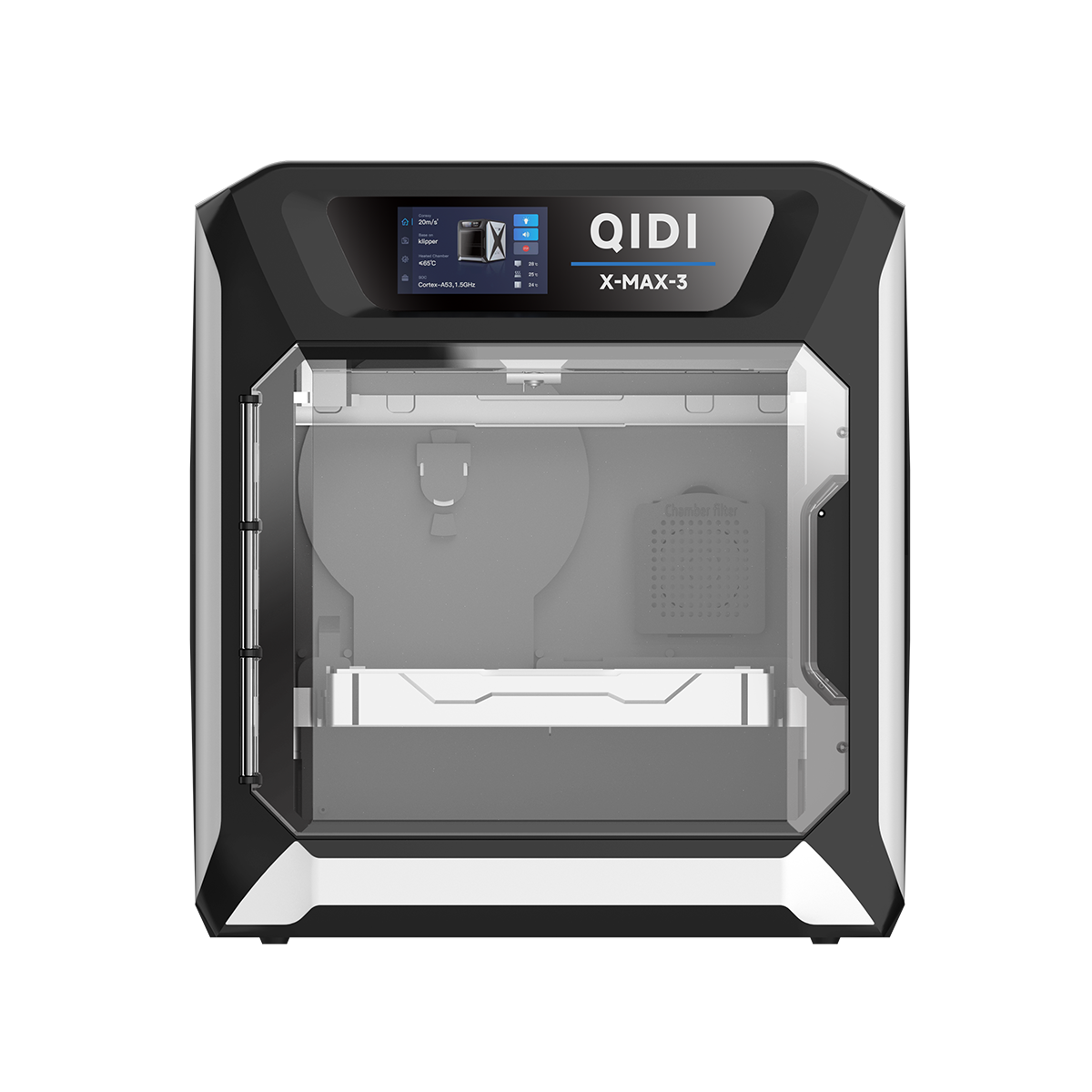 X-Max 3


10 Moments 3D Printing Changed the World: A Geek Pride Day Celebration


Geek Pride Day belongs to people who love clever tools, sci-fi worlds, tabletop campaigns, robots, code, props, comics, and the quiet satisfaction of making an idea work in real life. Few technologies fit that spirit as naturally as 3D printing. A digital model can become a desk accessory, cosplay detail, robot bracket, classroom prototype, or repair part. For makers, engineers, students, hobbyists, and fandom creators, it turns imagination into something physical enough to test, paint, improve, and share.
What Is Geek Pride Day and Why 3D Printing Fits the Celebration
Geek Pride Day is celebrated on May 25 as a day for geek culture, technology, creativity, fandom, and specialized passions. The modern celebration gained momentum in Spain in 2006 and spread through online communities. Today, it connects naturally with sci-fi fans, gamers, coders, cosplayers, engineers, collectors, and makers who take pride in knowing the details others often overlook.
That is why 3D printing feels so at home in the celebration. It rewards curiosity and patience. A maker can design a custom keyboard knob, print a tabletop terrain piece, test a robot mount, adjust the file, and try again. The workflow feels familiar to anyone who has ever built a PC, modded a setup, painted a miniature, repaired a gadget, or spent an evening solving one tiny design problem.
At its core, additive manufacturing builds objects layer by layer from digital model data. That simple idea changed how people create because it gives individuals a practical path from screen to hand. The result can be measured, sanded, painted, assembled, installed, gifted, or improved after real use.
10 Moments 3D Printing Changed the World
1. Rapid Prototyping Made Product Ideas Easier to Test
Product development used to move slowly when every physical sample required costly tooling or outside manufacturing support. Rapid prototyping changed that rhythm. Designers and engineers could create a physical version of an idea, check proportions, test fit, find weak points, and revise the file before moving into production.
A handle might feel uncomfortable after ten minutes of use. A case might block a cable. A clip might snap at a thin corner. Digital models do not always reveal those problems. A printed prototype puts the design into someone’s hands early enough to fix it.
2. Desktop 3D Printers Brought Manufacturing Home
Desktop machines made personal fabrication feel possible. A hobbyist no longer needed a factory contact to create a cable clip, miniature base, storage tray, sensor bracket, or custom enclosure. Home users could download files, remix designs, learn slicer settings, and share results with other makers.
This shift gave 3D printing a strong community identity. People began trading print profiles, showing failed prints, comparing materials, and helping strangers solve adhesion, stringing, warping, support, and tolerance issues. Manufacturing moved closer to bedrooms, garages, classrooms, and small workshops.
3. Custom Medical Devices Became More Accessible
Medical use cases show the serious side of additive manufacturing. Specialized medical production can create patient-matched anatomical models, surgical guides, dental restorations, external prosthetics, and selected implants. These applications depend on professional equipment, regulated workflows, approved materials, and clinical oversight.
The important lesson for everyday readers is customization. Human bodies vary, and medical teams often need shapes that match a specific patient or procedure. Additive processes can produce complex forms from medical data, giving professionals another route for planning, training, fitting, and selected patient care applications.
4. Cosplay, Props, and Fandom Builds Became More Creative
Cosplay has always been a maker-driven craft. Foam, fabric, resin, paint, clay, wood, and hand tools still matter. Additive manufacturing added another powerful option for pieces that need symmetry, repeatability, crisp details, or precise scaling.
Helmets, armor panels, sci-fi badges, creature details, display-safe prop replicas, and collectible stands can be modeled digitally, split into printable sections, glued, filled, sanded, primed, and painted. A wrist piece can be resized after a test fit. A prop handle can be hollowed to reduce weight. A display stand can be shaped around the exact item it supports.

5. STEM Education Became More Hands-On
Students understand technical ideas faster when they can hold them. A printed gear train can jam. A bridge model can bend. A robot chassis can wobble if the mounting points are wrong. A geometry model can show volume, symmetry, and angles in a way a worksheet cannot.
For teachers, 3D printing connects design software, measurement, math, engineering, iteration, and critical thinking. Students learn that failure is useful when it produces evidence. A warped print, loose peg, tight hinge, or weak corner creates a real design question. The lesson becomes practical, memorable, and easier to discuss.

6. Small Businesses Started Prototyping Like Big Companies
Small businesses often need prototypes but cannot afford long development cycles. A local product designer, repair shop, craft studio, or hardware startup can use additive manufacturing to test forms before paying for tooling or large production runs.
Useful business prints include packaging inserts, ergonomic samples, display models, jigs, fixtures, camera mounts, tool holders, and small batch accessories. These parts may never become final retail products, yet they help teams check ideas faster. That speed matters when cash flow, deadlines, and customer feedback all shape the next decision.
7. Replacement Parts Could Be Printed on Demand
Many useful products fail because one plastic part breaks. A missing knob, cracked cover, worn clip, or discontinued bracket can make a device frustrating to use. Digital fabrication gives repair-minded users another path.
Some components should never be copied casually, especially parts exposed to heat, electricity, heavy loads, food contact, or safety-critical stress. Still, many non-critical parts can be measured, modeled, printed, tested, and improved. For people who dislike waste, 3D printing supports a repair culture built around practical problem-solving.
8. Engineering Materials Made Functional Parts Stronger
Early desktop prints were often treated as simple plastic models. Material development changed expectations. PLA remains friendly for decorative objects and prototypes. PETG works well for many durable everyday parts. ABS and ASA can suit stronger or outdoor-focused builds when printed under proper thermal conditions. Nylon, polycarbonate, flexible TPU, and fiber-filled filaments can support demanding maker and engineering projects.
Material choice affects strength, flexibility, heat resistance, UV performance, finish, and print difficulty. A bracket, hinge, drone part, tool holder, or enclosure needs the right material as much as it needs a good model.
9. Aerospace and Space Projects Adopted 3D Printing
Space projects gave additive manufacturing one of its most memorable moments: a tool design sent from Earth was printed in orbit as a plastic ratchet wrench. The deeper value was logistics. In space, every gram, storage slot, and supply mission matters. A digital part file can reduce dependence on carrying every possible tool in advance.
For everyday makers, the lesson is smaller but still powerful. Making near the point of need can save time. A workshop, classroom, or home studio can produce a useful object when the problem appears, then adjust the design after testing.
10. Maker Culture Turned Everyday Geeks Into Inventors
The most lasting change may be cultural. 3D printing made the invention feel less distant. A gamer can build terrain. A parent can help print a science project mechanism. A programmer can create a smart home sensor case. A student can improve a robot part. A collector can design a display stand that fits one exact object.
Maker culture grows because people share files, settings, fixes, failures, and finished builds. The community does not only celebrate perfect prints. It also celebrates the messy process of testing, learning, and improving.
Why 3D Printing Became the Ultimate Geek Tool
Geeks often enjoy systems. They like rules, hidden settings, upgrades, exceptions, and the satisfaction of making something work better. That makes 3D printing especially attractive. It combines software, hardware, materials, design, and real-world testing in one creative workflow.
Customization is the first hook. A store-bought cable organizer might work, but a printed one can match the exact desk layout, cable bundle, monitor stand, and style of a personal setup. A tabletop gamer can build terrain for a specific campaign. A robotics hobbyist can create brackets that match the sensors already on hand.
Experimentation is the second hook. Every print asks for decisions about layer height, wall thickness, infill, orientation, support, tolerance, speed, and material. Those settings create a rewarding loop. You print, check, adjust, and print again.
Problem-solving is the third hook. Many makers want parts that solve small, personal annoyances. A better headset hook, webcam mount, drawer divider, smart home enclosure, controller stand, or charging dock can make a space feel more organized and personal.

Geek Pride Day 3D Printing Ideas for Makers
Use Geek Pride Day to print something that solves a real problem in your setup, game table, workshop, or display shelf. Pick a project with clear measurements first, then add personality through color, texture, engraving, lighting, or a fandom-inspired shape.
| Project Idea | Best For | Practical Tip |
| Custom desk accessories | Programmers, gamers, home office users | Measure your keyboard, monitor stand, cable path, and available desk space before modeling |
| Sci-fi inspired props | Cosplay fans and collectors | Split large pieces into smaller sections so printing, sanding, and painting stay manageable |
| Tabletop gaming terrain | Game masters and miniature painters | Design modular tiles, walls, doors, and risers so future campaigns can reuse the same parts |
| Cable organizers and tool holders | Setup enthusiasts and workshop users | Add slots, labels, magnet pockets, screw holes, or pegboard hooks during the design stage |
| Printer upgrades or functional parts | Tinkerers and workshop users | Check heat, load, movement, friction, and material limits before choosing the filament |
| Personalized gifts | Friends, clubs, teams, and classrooms | Add initials, icons, dates, symbols, or inside jokes to make a simple print feel custom |
For an easy first project, print a dice tray, cable clip, badge, phone stand, or small drawer organizer. For a weekend build, try a two-piece prop, controller wall mount, modular storage insert, or themed display base. The best projects are specific: they fit your space, your tools, your hobby, or the fandom detail only your group would notice.
How QIDI 3D Printers Help Bring Geek Ideas to Life
For ambitious maker projects, the printer has to match the scale and material needs of the build. A small PLA desk accessory may only need clean first layers and simple setup. A large cosplay part, prototype housing, workshop fixture, or robot component usually needs more build space, steadier temperature control, and stronger filament compatibility.
QIDI’s desktop FDM printers are relevant here because QIDI focuses on enclosed printing, high-temperature capability, automatic leveling, and support for both common and engineering-grade materials. For makers who want to move from decorative models into stronger functional parts, these features can help with print stability, layer adhesion, and material flexibility.
QIDI Max4 is a strong fit for Geek Pride Day projects that need more room or more demanding materials:
- Large build volume: 390 × 390 × 340 mm for helmet sections, armor panels, oversized props, storage systems, and workshop fixtures.
- High-temperature printing: a print head rated up to 370°C for broader material options.
- Active chamber heating: third-generation independent chamber heating up to 65°C for materials that benefit from a controlled environment.
- Material compatibility: support for PLA, ABS, ASA, PETG, TPU, PA, PC, and carbon or glass fiber reinforced polymers.
- QIDI Box compatibility: multi-color and multi-material printing when paired with QIDI Box, with expanded setups supporting up to 16-color projects.
- Smart printing features: automatic leveling, AI camera detection, and a tool head rated up to 800 mm/s, with real print speed depending on material, nozzle flow, model geometry, and settings.
For makers building life-size sci-fi armor, massive tabletop terrain, durable robot components, or large display pieces, Max4 gives the project more space to grow. The main value is not simply size. It is the combination of build volume, heat control, and material range that helps complex ideas move from saved files to finished parts.
Celebrate Geek Pride Day by Making Something Real
3D printing changed the world because it made creation feel reachable. It gave designers faster prototypes, students better learning tools, makers stronger repair options, fans richer cosplay builds, and small businesses a practical way to test ideas. Geek Pride Day is the perfect reason to turn one saved idea into a real object. Print a useful part, a playful prop, a tabletop piece, or a gift for another fan. The best celebration is the one that leaves something physical on your desk when the day ends.
FAQs about Geek Pride Day 3D Printing
Q1. Can Beginners Try 3D Printing on Geek Pride Day?
Yes. Beginners can choose simple models with flat bases, low support requirements, and short print times. A cable clip, badge, dice tray, phone stand, or small organizer is easier to finish successfully. Start with PLA, check bed leveling, and review the sliced preview before printing.
Q2. What Filament Is Best for Geek Pride Day Projects?
PLA is usually the easiest choice for decorative models, desk accessories, miniatures, and display pieces. PETG works better for parts that need extra toughness. ABS, ASA, nylon, PC, and reinforced filaments can suit functional projects, but they often need higher temperatures and better chamber control.
Q3. Do 3D Printed Parts Need Post-Processing?
Often, yes. Many printed parts look better after removing supports, trimming edges, sanding layer lines, priming, painting, or adding hardware. Cosplay pieces and props usually need more finishing work. Functional parts may need drilling, inserts, screws, magnets, or tolerance adjustments after the first test fit.
Q4. Where Can Makers Find 3D Models to Print?
Makers can use public model libraries, community marketplaces, open-source repositories, or their own CAD designs. Always check the license before printing, modifying, selling, or sharing a file. For custom parts, measuring the real object first usually gives better results than guessing dimensions.
Q5. Is 3D Printing Safe for Indoor Maker Spaces?
Yes, with the right setup. Use the printer in a stable, ventilated area, keep it away from flammable clutter, and follow material safety guidance. PLA is generally easier for home use. Materials like ABS, ASA, nylon, or PC need more attention to ventilation, temperature, and enclosure conditions.
- What Is Geek Pride Day and Why 3D Printing Fits the Celebration
- 10 Moments 3D Printing Changed the World
- 1. Rapid Prototyping Made Product Ideas Easier to Test
- 2. Desktop 3D Printers Brought Manufacturing Home
- 3. Custom Medical Devices Became More Accessible
- 4. Cosplay, Props, and Fandom Builds Became More Creative
- 5. STEM Education Became More Hands-On
- 6. Small Businesses Started Prototyping Like Big Companies
- 7. Replacement Parts Could Be Printed on Demand
- 8. Engineering Materials Made Functional Parts Stronger
- 9. Aerospace and Space Projects Adopted 3D Printing
- 10. Maker Culture Turned Everyday Geeks Into Inventors
- Why 3D Printing Became the Ultimate Geek Tool
- Geek Pride Day 3D Printing Ideas for Makers
- How QIDI 3D Printers Help Bring Geek Ideas to Life
- Celebrate Geek Pride Day by Making Something Real
- FAQs about Geek Pride Day 3D Printing
- Q1. Can Beginners Try 3D Printing on Geek Pride Day?
- Q2. What Filament Is Best for Geek Pride Day Projects?
- Q3. Do 3D Printed Parts Need Post-Processing?
- Q4. Where Can Makers Find 3D Models to Print?
- Q5. Is 3D Printing Safe for Indoor Maker Spaces?
Recommended products